
.jpg)
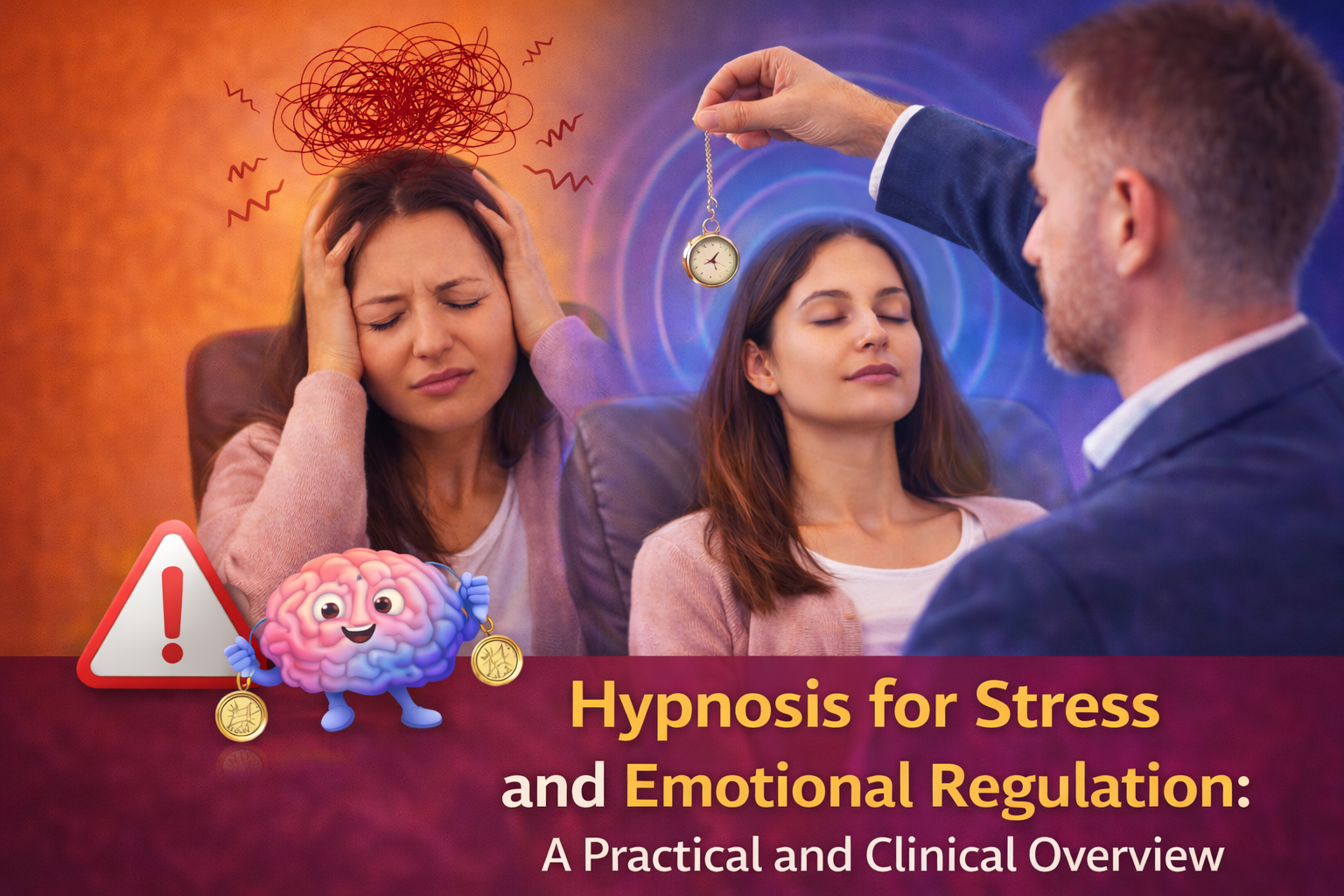
Hypnosis for Stress and Emotional Regulation: A Practical and Clinical Overview
Stress is a normal part of life. In moderate amounts, it can sharpen focus and motivate action. However, when stress becomes persistent or overwhelming, it begins to affect emotional balance, decision-making, and physical health. Many individuals struggle not only with stressful situations themselves, but with how intensely they react to them.
Emotional regulation refers to the ability to manage and respond to emotional experiences in a balanced and constructive way. When stress levels are high, emotional regulation often weakens. Reactions become automatic, disproportionate, or difficult to control.
Hypnosis for stress works by addressing these automatic stress responses at a subconscious level. Rather than attempting to eliminate stress entirely, hypnosis helps recalibrate how the mind and body respond to it. Understanding how this process works provides a clearer picture of its practical benefits.
Understanding Stress as a Learned Response
Stress responses are not random. They are shaped by experience, perception, and conditioning. Over time, the subconscious mind learns to associate certain situations with threat or pressure, even when those situations are not objectively dangerous.
For example, workplace deadlines, social interactions, or financial uncertainty may trigger disproportionate stress responses. The body reacts as though it is facing immediate danger, activating increased heart rate, muscle tension, and heightened alertness.
These responses become habitual. The more frequently they are triggered, the more automatic they become. Conscious reasoning may tell a person that a situation is manageable, but the body still reacts intensely.
Hypnosis for stress works by interrupting this automatic cycle and creating space for a calmer response.
How Hypnosis Regulates the Nervous System
One of the primary benefits of hypnosis for stress is its direct effect on the nervous system. During hypnosis, the body shifts from a heightened fight-or-flight state into a calmer parasympathetic state.
Breathing becomes slower and more controlled. Muscle tension decreases. Heart rate stabilizes. This physiological shift signals safety to the brain, reducing the intensity of stress signals.
Repeated exposure to this calm state during hypnosis sessions gradually retrains the nervous system. The body learns that not every challenge requires a high-alert response. Over time, stress triggers lose some of their intensity.
This regulation does not occur through force or suppression. It occurs through repetition and reinforcement of calm responses.
Strengthening Emotional Awareness
Stress often intensifies when emotions are not clearly understood. Individuals may feel irritable, overwhelmed, or anxious without recognizing the underlying emotional cause.
Hypnosis enhances emotional awareness by quieting mental noise and allowing internal experiences to surface more clearly. In a focused state, individuals can observe their emotions without immediate reaction.
This observation reduces impulsive responses. Instead of reacting automatically, the mind gains time to process and choose a response deliberately.
Emotional regulation begins with awareness. Hypnosis supports this awareness in a controlled and supportive environment.
Reframing Stressful Perceptions
Stress is closely tied to perception. Two individuals may experience the same situation but respond differently based on how they interpret it. Perception shapes emotional intensity.
Hypnosis helps reframe stressful perceptions by reducing defensive mental patterns. In a calm state, the subconscious mind becomes more open to alternative interpretations.
For instance, a challenging task may shift from being perceived as a threat to being viewed as an opportunity for growth. This cognitive reframing changes emotional response without denying reality.
By adjusting perception at a subconscious level, hypnosis reduces the habitual stress reaction connected to certain triggers.
Reducing Emotional Reactivity
Emotional reactivity refers to the speed and intensity of emotional responses. When stress levels are high, reactions may become exaggerated. Small inconveniences may produce disproportionate frustration or anxiety.
Hypnosis slows this reaction cycle. By strengthening internal calmness and mental clarity, individuals become less reactive and more deliberate in their responses.
This shift is often subtle at first. Over time, individuals notice that situations that previously triggered strong reactions feel more manageable.
Reducing reactivity improves relationships, decision-making, and overall emotional balance.
Supporting Recovery After Stressful Events
Stressful events are unavoidable. What often determines long-term impact is how quickly an individual recovers emotionally afterward.
Hypnosis for stress improves recovery time by reinforcing calm states and reducing rumination. Instead of replaying stressful events repeatedly, the mind learns to disengage and reset.
This recovery process prevents stress from accumulating and compounding over time.
Addressing Chronic Stress Patterns
Chronic stress differs from temporary stress. It becomes a baseline state where tension and alertness are constant.
Hypnosis addresses chronic stress by gradually lowering this baseline. Through consistent sessions, the nervous system adapts to a calmer default state.
This shift supports better sleep, clearer thinking, and improved physical comfort. Muscle tension, headaches, and digestive discomfort associated with stress often decrease when the mind becomes more regulated.
Enhancing Focus Under Pressure
Stress frequently disrupts focus. Under pressure, thoughts may scatter or become repetitive. Decision-making becomes more difficult.
Hypnosis strengthens focused attention. By training the mind to concentrate calmly, individuals develop the ability to remain composed even in demanding situations.
This ability enhances performance without increasing emotional strain.
Integrating Hypnosis with Daily Stress Management
Hypnosis does not replace healthy lifestyle practices such as exercise, proper rest, and balanced routines. Instead, it complements them.
When subconscious stress patterns are adjusted, daily coping strategies become more effective. Relaxation techniques, time management, and communication skills are easier to apply when emotional reactivity is reduced.
This integrative approach produces more sustainable outcomes than relying on surface-level techniques alone.
Realistic Expectations for Stress Reduction
It is important to understand that hypnosis for stress does not eliminate challenges. Life will continue to present demands and unpredictability.
The goal of hypnosis is not to remove stress entirely, but to transform the internal response to it. Progress often appears as increased calmness, quicker emotional recovery, and improved clarity during difficult moments.
These changes may develop gradually across sessions.
A Balanced Conclusion
Hypnosis for stress and emotional regulation offers a structured way to recalibrate automatic responses. By working at a subconscious level, it reduces physiological tension, enhances emotional awareness, and supports balanced perception.
Stress is not simply a reaction to circumstances. It is shaped by interpretation, conditioning, and internal patterns. Hypnosis addresses these deeper layers without suppressing emotion or forcing change.
When practiced professionally and consistently, hypnosis becomes a practical tool for improving emotional stability and resilience. Rather than reacting automatically to pressure, individuals gain the ability to respond with clarity and control.
Understanding this distinction allows hypnosis for stress to be viewed realistically as a method for internal adjustment rather than a promise of external perfection.