
 (1).jpg)
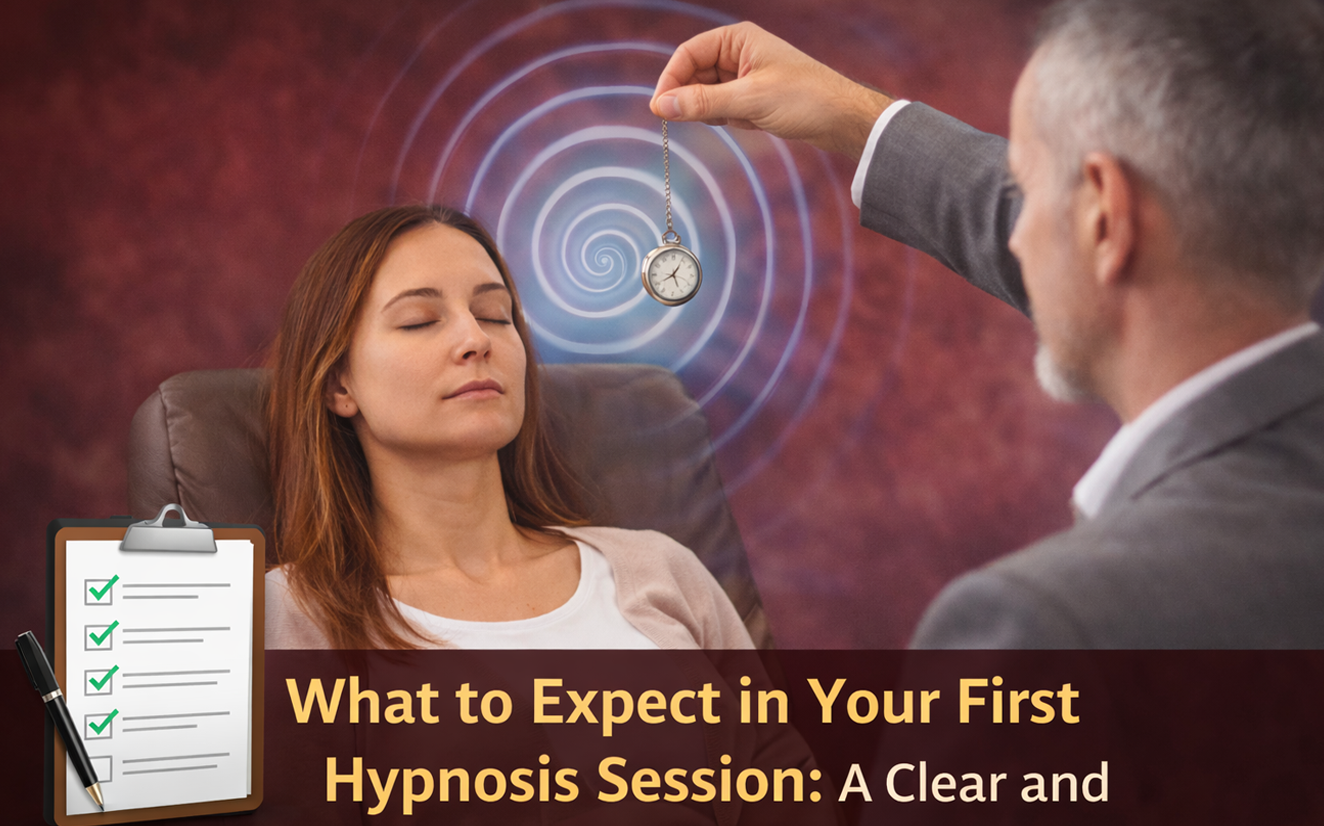
What to Expect in Your First Hypnosis Session: A Clear and Professional Guide
Beginning hypnosis therapy can feel unfamiliar, especially for those who have never experienced it before. It is natural to wonder what will happen, whether it will feel unusual, or if there is anything specific you need to prepare for. Most hesitation around a first hypnosis session comes from uncertainty rather than actual risk.
Understanding what to expect in your first hypnosis session helps remove unnecessary anxiety and allows you to approach the process with clarity. Hypnosis therapy is structured, collaborative, and grounded in communication. It is not dramatic or theatrical. Instead, it unfolds in a calm and deliberate manner designed to support comfort and focus.
This guide explains each stage of a typical first hypnosis session, what you may experience mentally and physically, and how to prepare effectively.
The Initial Conversation and Assessment
A professional first hypnosis session does not begin with immediate induction. It begins with conversation. This stage is often referred to as the consultation or pre-talk.
During this discussion, the practitioner asks about your goals, concerns, and expectations. You may be asked about when the issue began, how it affects daily life, and what you hope to change. This is not an interrogation. It is a way of ensuring clarity and suitability.
The practitioner may also explain how hypnosis works, address common myths, and answer any questions you have. This conversation builds trust and ensures informed consent. It also allows the practitioner to determine whether hypnosis is appropriate for your situation.
This initial phase is essential. Hypnosis is most effective when there is mutual understanding and clear intention.
Clarifying Goals and Setting Expectations
Before beginning hypnosis, specific goals are clarified. Vague intentions such as “I want to feel better” are refined into more practical outcomes. For example, the focus might shift toward improving emotional regulation, reducing stress responses, or building confidence in specific situations.
Setting realistic expectations is equally important. Hypnosis is not a quick fix. While some people notice shifts after a single session, sustainable change typically unfolds over time. The practitioner will outline what is achievable and avoid exaggerated promises.
This transparency supports both safety and effectiveness.
The Induction Process
After the consultation and goal clarification, the practitioner guides you into the hypnotic state. This phase is known as induction.
Induction is not sudden or forceful. It usually involves controlled breathing, guided imagery, progressive relaxation, or focused attention techniques. The purpose is to help your mind shift from scattered awareness to concentrated focus.
During induction, you remain aware. You hear the practitioner’s voice, understand instructions, and can respond if necessary. You are not asleep. Most individuals describe the state as calm, focused, and internally attentive.
The experience may feel similar to deep concentration or meditation. External distractions fade, but awareness does not disappear.
Deepening Focus and Engagement
Once the initial state of focus is achieved, the practitioner may use techniques to deepen the experience. Deepening does not mean losing control. It means increasing mental absorption and reducing surface-level distractions.
At this stage, your attention is primarily directed inward. Thoughts may slow, and physical relaxation often increases. Some individuals notice a sense of heaviness or lightness in their body. Others simply feel mentally quiet.
It is important to understand that experiences vary. There is no single “correct” way hypnosis should feel. Subtle focus can be just as effective as deeper relaxation.
The Therapeutic Work
The core of your first hypnosis session involves therapeutic work tailored to your goals. This may include guided imagery, reframing exercises, constructive suggestions, or structured exploration of emotional patterns.
The practitioner’s language is deliberate and supportive. Suggestions are aligned with your stated objectives and personal values. You are not forced to accept anything. Your mind naturally filters information based on relevance and safety.
Depending on the issue being addressed, the work may focus on building positive associations, reducing emotional intensity, or strengthening adaptive responses.
In a first session, the work is often foundational rather than deeply intensive. The practitioner evaluates responsiveness and comfort before moving into more complex exploration in future sessions.
Returning to Full Awareness
At the end of the session, the practitioner guides you back to full external awareness gradually. This process is calm and structured. There is no abrupt transition.
You may be asked to take a few deep breaths or gently reorient your attention to your surroundings. Most individuals feel relaxed and clear afterward. Some feel energized. Others feel reflective.
It is normal for the experience to feel subtle rather than dramatic.
Post-Session Reflection
After the hypnosis portion concludes, there is typically a short discussion. You may be asked how the session felt and whether you noticed specific shifts or insights.
This reflection reinforces awareness and helps integrate the experience into daily life. The practitioner may provide simple recommendations or exercises to support continuity until the next session.
Hypnosis is most effective when insights are applied outside the session. Awareness gained during focused attention becomes meaningful when integrated into real-world behavior.
Common Sensations During a First Hypnosis Session
People often wonder what hypnosis feels like physically and mentally.
Common experiences include:
- Deep relaxation
- Focused concentration
- Mild detachment from external distractions
- Heightened internal imagery
- Reduced mental chatter
Some individuals expect dramatic sensations. When these do not occur, they assume hypnosis did not work. In reality, hypnosis often feels natural and familiar. Subtlety does not indicate ineffectiveness.
What Hypnosis Does Not Feel Like
It is equally important to clarify what hypnosis does not involve.
You will not lose consciousness.
You will not lose control.
You will not reveal secrets unwillingly.
You will not be unable to wake up or return to normal awareness.
These concerns stem from misunderstanding rather than clinical reality.
Preparing for Your First Hypnosis Session
Preparation for a hypnosis session is straightforward.
Choose comfortable clothing.
Avoid heavy meals immediately before the session.
Ensure you are well-rested.
For online sessions, arrange a quiet, private space with minimal distractions.
Mental preparation involves openness rather than belief. You do not need to “try hard” to be hypnotized. Simply follow instructions and allow your attention to settle naturally.
A Realistic Perspective
Your first hypnosis session is an introduction to a process, not a final destination. It establishes rapport, clarifies goals, and demonstrates how your mind responds to focused attention.
Progress may begin immediately, or it may unfold gradually across sessions. Either outcome is normal.
Hypnosis therapy is structured, ethical, and collaborative. When approached with realistic expectations and guided professionally, it becomes a supportive environment for meaningful change.
Understanding what to expect removes unnecessary anxiety and allows you to engage fully in the experience. Rather than wondering whether something unusual will happen, you can focus on what matters: developing awareness, clarity, and constructive change.