
 (1).jpg)
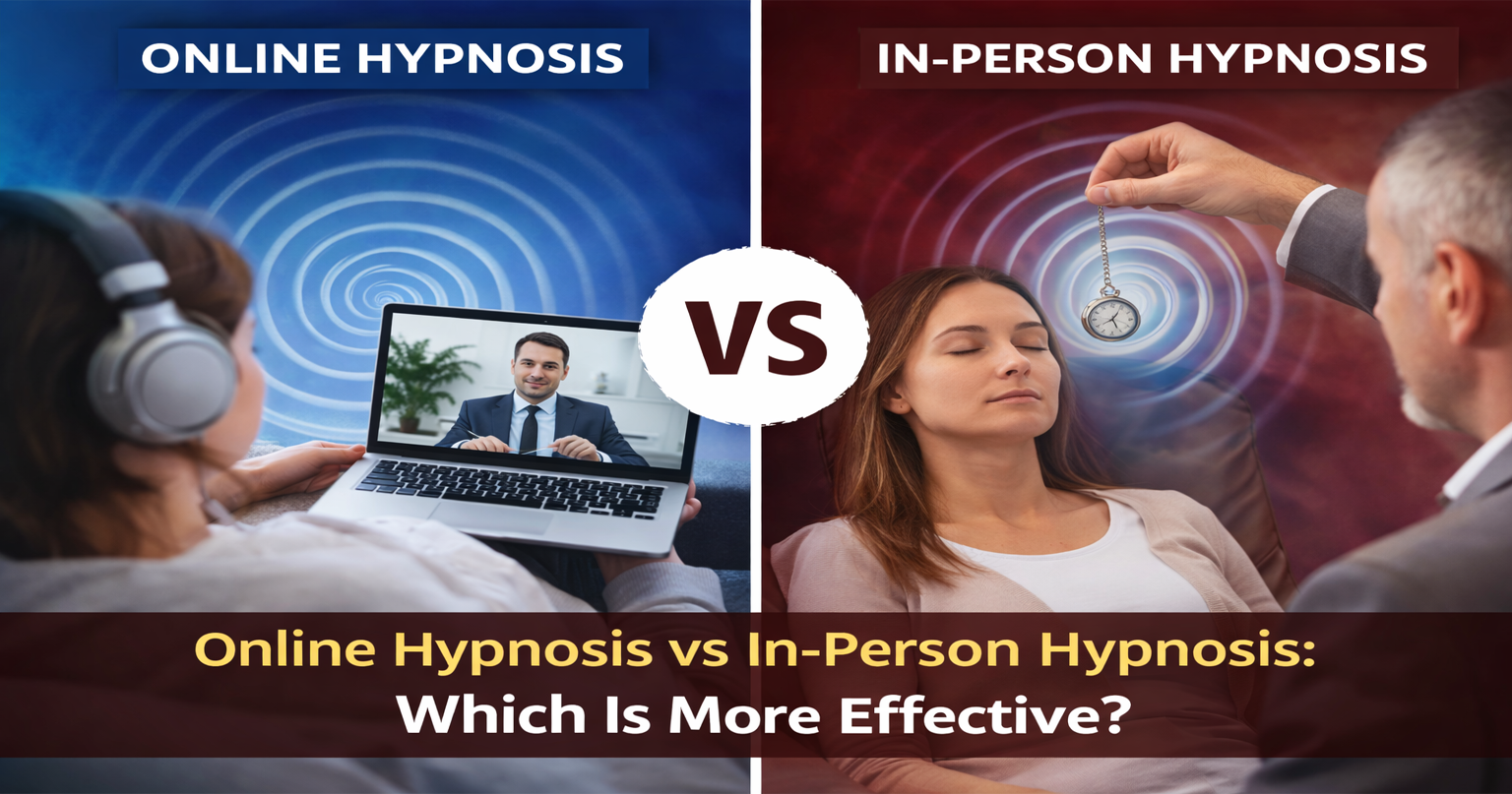
Online Hypnosis vs In-Person Hypnosis: Which Is More Effective?
As hypnosis therapy becomes more accessible, many individuals find themselves choosing between two formats: online hypnosis and in-person hypnosis. While both approaches use the same psychological principles, the delivery method differs. This raises a practical and important question: is online hypnosis as effective as in-person hypnosis, or does physical presence make a meaningful difference?
The answer is not based on assumption or preference alone. Effectiveness depends on understanding how hypnosis works, what factors influence results, and how each format supports the therapeutic process.
To evaluate online hypnosis vs in-person hypnosis fairly, it is essential to look beyond convenience and examine structure, engagement, environment, and psychological depth.
How Hypnosis Works Regardless of Location
Hypnosis is fundamentally a mental process. It does not rely on physical touch, equipment, or environmental theatrics. It works through focused attention, guided language, and internal awareness. Because of this, the core mechanism of hypnosis remains the same whether the session takes place in a therapist’s office or through a secure online platform.
In both formats, the individual enters a state of focused concentration and relaxed awareness. The subconscious mind becomes more accessible, and therapeutic suggestions are introduced within a structured and ethical framework.
Since hypnosis is internally generated rather than externally imposed, physical proximity is not a requirement for effectiveness. What matters more is attention, engagement, and psychological readiness.
Advantages of In-Person Hypnosis
In-person hypnosis offers certain environmental advantages. Being physically present in a professional setting can enhance a sense of structure and formality. For some individuals, entering a dedicated therapeutic space helps signal that the session is distinct from daily routine.
The practitioner can observe subtle physical cues more directly, such as posture shifts, breathing changes, and micro-expressions. Although many of these cues can also be observed online, in-person sessions may provide slightly greater environmental control.
Additionally, some individuals simply feel more comfortable with face-to-face interaction. The physical presence of a practitioner can create reassurance, especially for those new to hypnosis therapy.
Advantages of Online Hypnosis
Online hypnosis provides a different kind of advantage: comfort within a familiar environment. Many individuals find it easier to relax in their own home than in an unfamiliar office. Since relaxation and focus are essential for hypnosis, this comfort can enhance receptivity.
Online sessions also remove geographical limitations. Individuals can work with qualified practitioners regardless of location. This broader access increases the likelihood of finding a practitioner whose approach aligns with specific needs.
Flexibility is another significant benefit. Scheduling becomes easier, travel time is eliminated, and sessions can integrate more smoothly into daily routines. For individuals balancing work and family commitments, this convenience increases consistency.
From a psychological perspective, the hypnotic state itself does not weaken in an online format. Attention and suggestion operate through communication, not physical distance.
Addressing Concerns About Online Effectiveness
A common concern is whether online hypnosis is less powerful than in-person sessions. This assumption often comes from the belief that physical presence enhances influence.
However, hypnosis does not depend on physical proximity. The hypnotic state arises from internal focus, not from the practitioner’s physical presence. Clear audio, stable connection, and minimal distraction are far more important than location.
Research and clinical experience increasingly support the effectiveness of telehealth modalities in psychological practice. Hypnosis adapts well to this format because its core mechanism is communication-based rather than physically interactive.
Environmental Factors That Influence Results
Regardless of format, environment matters. In-person sessions take place in controlled therapeutic settings designed to reduce distraction. Online sessions require the individual to create a similar environment at home.
Privacy, quiet surroundings, comfortable seating, and reliable technology are essential for online hypnosis. When these conditions are met, the quality of the experience is comparable to in-person sessions.
Distraction is the main factor that can reduce effectiveness in either format. A busy home environment may interfere with online sessions, just as external interruptions could disrupt an in-office appointment.
Psychological Comfort and Personal Preference
Effectiveness is influenced by personal comfort. Some individuals feel safer and more grounded in their own space. Others feel more secure in a structured clinical environment.
The mind responds better when it feels safe. Therefore, the preferred format is often the one in which the individual feels most comfortable and focused.
Choosing between online hypnosis and in-person hypnosis is often less about superiority and more about alignment with personal preference and lifestyle.
Suitability for Different Types of Concerns
For most goals such as stress management, confidence building, habit change, and emotional regulation both formats are equally effective when conducted professionally.
For highly complex or trauma-related work, some individuals may initially prefer in-person sessions due to the additional sense of containment. However, many practitioners successfully conduct trauma-informed hypnosis online with proper preparation and assessment.
The key factor is not format, but professional competence and client readiness.
Communication and Rapport
Therapeutic rapport plays a significant role in hypnosis effectiveness. Rapport is built through trust, clarity, and respectful communication. These elements can develop equally in both online and in-person settings.
Video sessions allow for facial expression, tone of voice, and conversational exchange similar to in-person interaction. Strong rapport depends more on practitioner skill than on physical location.
When rapport is present, the hypnotic process flows naturally regardless of format.
Technical Considerations in Online Hypnosis
Online hypnosis requires attention to technical details. A stable internet connection, good audio quality, and minimal lag are important for maintaining rhythm and focus.
Practitioners typically provide preparation guidelines before online sessions, including recommendations for headphones and privacy. These practical measures ensure continuity and reduce interruption risk.
When these standards are followed, online hypnosis functions smoothly and effectively.
Comparing Commitment and Accountability
In-person sessions may foster stronger psychological commitment because of the effort involved in attending. Travel time and physical presence reinforce the sense of importance.
Online sessions, however, increase accessibility and reduce barriers. For some individuals, reduced logistical difficulty increases attendance consistency.
Consistency matters more than format. Regular sessions, whether online or in person, strengthen the therapeutic process.
A Balanced Perspective
Online hypnosis and in-person hypnosis are not competing methods. They are different delivery formats for the same therapeutic principles. Each offers advantages shaped by environment, convenience, and personal comfort.
Effectiveness depends on focus, readiness, professional guidance, and consistency rather than physical location. Hypnosis works through attention and internal processing, not proximity.
For individuals seeking hypnosis therapy, the most important question is not which format is superior, but which format supports comfort, engagement, and regular participation.
When approached thoughtfully and guided professionally, both online hypnosis and in-person hypnosis can produce meaningful and sustainable results.