
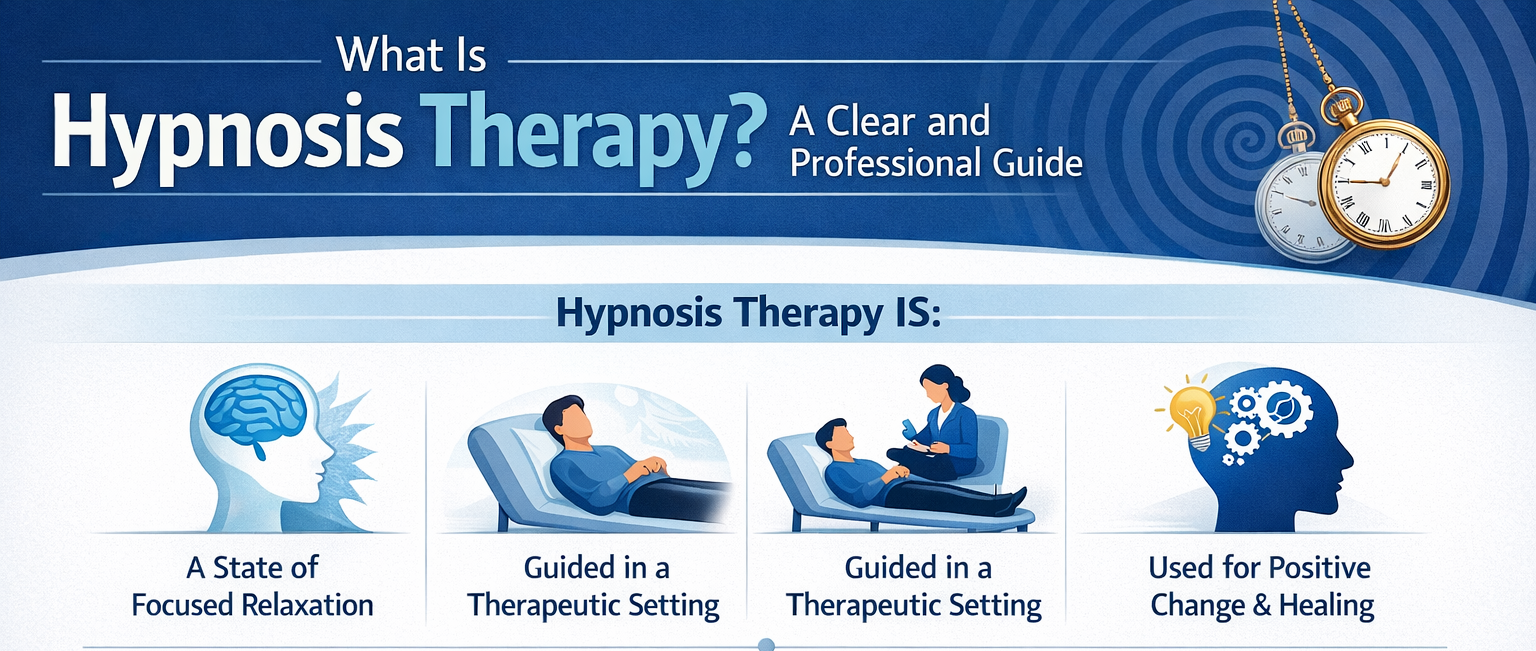

Hypnosis therapy is often spoken about, but rarely explained with the clarity it deserves. Many people confuse it with entertainment, assume it involves loss of control, or dismiss it as imagination. These assumptions usually come from incomplete or misleading information rather than from an understanding of how hypnosis therapy is actually practiced in a professional setting.
In reality, hypnosis therapy is a structured therapeutic approach used to work with thought patterns, emotional responses, and behavioural habits at a deeper level of awareness. It is practiced globally by trained professionals and is increasingly recognised as a complementary method within modern therapeutic and wellness frameworks. To understand its value, it is important to move past myths and focus on what hypnosis therapy truly is, how it works, and why it is used.
This article provides a clear, grounded explanation of hypnosis therapy without exaggeration, without promises of instant change, and without theatrical language. The goal is understanding, not persuasion.
What Is Hypnosis Therapy?
Hypnosis therapy, sometimes referred to as clinical hypnosis, is a therapeutic process that uses a state of focused attention to support psychological and emotional change. It works by engaging the subconscious mind, where many automatic behaviours, emotional reactions, and deeply held beliefs are formed and stored.
Unlike casual relaxation techniques, hypnosis therapy is intentional and goal-oriented. It is guided by a practitioner who helps the individual enter a calm, attentive mental state. In this state, the mind becomes less distracted by external stimuli and internal mental noise, making it easier to explore internal experiences with clarity and awareness.
It is important to understand that hypnosis therapy does not involve unconsciousness. The individual remains aware, responsive, and capable of independent thought throughout the process. Hypnosis therapy does not bypass judgment or remove personal agency. Instead, it creates the mental conditions where insight and change can occur more naturally.
In professional practice, hypnosis therapy is not used to impose ideas or control behaviour. It is used to help individuals recognise existing patterns and gently reshape them in alignment with their own goals and values.
The Purpose and Goals of Hypnosis Therapy
The primary goal of hypnosis therapy is not to suppress symptoms, but to address the underlying patterns that give rise to them. Many challenges such as persistent stress, emotional reactivity, low confidence, or habitual behaviours are not sustained by logic alone. They are maintained by subconscious conditioning that operates automatically.
Hypnosis therapy aims to bring awareness to these automatic responses. By doing so, individuals gain the ability to respond differently rather than react habitually. This shift is subtle but powerful. Change occurs not through force, but through understanding and internal alignment.
Another goal of hypnosis therapy is emotional regulation. When the mind is overwhelmed or stuck in repetitive thought cycles, it becomes difficult to access calm reasoning. Hypnosis helps quiet this mental noise, allowing emotions to be processed without escalation or avoidance.
In many cases, hypnosis therapy also supports clarity and focus. By reducing internal resistance and distraction, individuals often find it easier to make decisions, maintain consistency, and develop a more balanced relationship with their thoughts and emotions.
How Hypnosis Therapy Works
Hypnosis therapy works by temporarily shifting how attention is directed. In everyday life, attention is scattered across multiple stimuli external demands, internal thoughts, and emotional reactions. During hypnosis, attention becomes more focused and inwardly directed.
This focused state allows the conscious mind to relax its habitual need to analyse and control. As this happens, the subconscious mind becomes more accessible. This does not mean the subconscious is exposed or unprotected. It simply becomes more responsive to reflection and constructive guidance.
The practitioner uses carefully structured language, imagery, and therapeutic techniques to guide the individual through this process. These techniques are designed to help the mind recognise existing associations and consider alternative responses. Importantly, the individual’s consent and participation remain central throughout the session.
Change during hypnosis therapy is not created by suggestion alone. It is the result of the mind recognising what no longer serves it and becoming open to healthier patterns. This is why hypnosis therapy works best when the individual is engaged and motivated, rather than passive or sceptical.
Who Can Benefit from Hypnosis Therapy?
Hypnosis therapy is not limited to a specific type of person or personality. It can be beneficial for individuals who are reflective, open to self-exploration, and interested in understanding their internal responses more deeply.
People often seek hypnosis therapy when they feel stuck despite conscious effort to change. This may include emotional patterns that repeat, habits that resist logic, or stress responses that feel automatic. Hypnosis therapy is particularly relevant when the challenge seems to exist beneath rational understanding.
That said, hypnosis therapy is not appropriate for every situation. Severe psychiatric conditions or unmanaged trauma may require specialised care beyond general hypnosis practice. Ethical practitioners recognise these boundaries and refer individuals to appropriate support when necessary.
Hypnosis therapy works best as part of a thoughtful approach to mental and emotional well-being, rather than as a last resort or a quick fix.
Hypnosis Therapy vs Talk Therapy
Hypnosis therapy and talk therapy are not opposing methods; they are different approaches that serve different functions. Talk therapy primarily engages the conscious mind through discussion, reasoning, and reflection. It is valuable for insight, understanding, and emotional expression.
Hypnosis therapy complements this by working experientially rather than analytically. Instead of discussing patterns, it allows individuals to observe and engage with them directly. This can be particularly helpful when insight alone does not lead to behavioural change.
Some individuals benefit from combining both approaches. Others may find hypnosis therapy effective on its own, depending on their needs and preferences. The key difference lies in how change is accessed, not in the legitimacy of either method.
Closing Perspective
Hypnosis therapy is best understood as a professional tool for working with the mind at a deeper level of awareness. It is not entertainment, manipulation, or passive treatment. It is a collaborative process that requires clarity, consent, and engagement.
When practiced responsibly, hypnosis therapy offers a structured way to address patterns that are difficult to change through conscious effort alone. It respects the individual’s autonomy while providing access to internal resources that are often overlooked.
For a broader understanding of how hypnosis works, its scientific foundation, safety considerations, and practical applications, it is helpful to explore the complete framework of hypnosis as a therapeutic process.