
.jpg)
What Is Hypnosis?
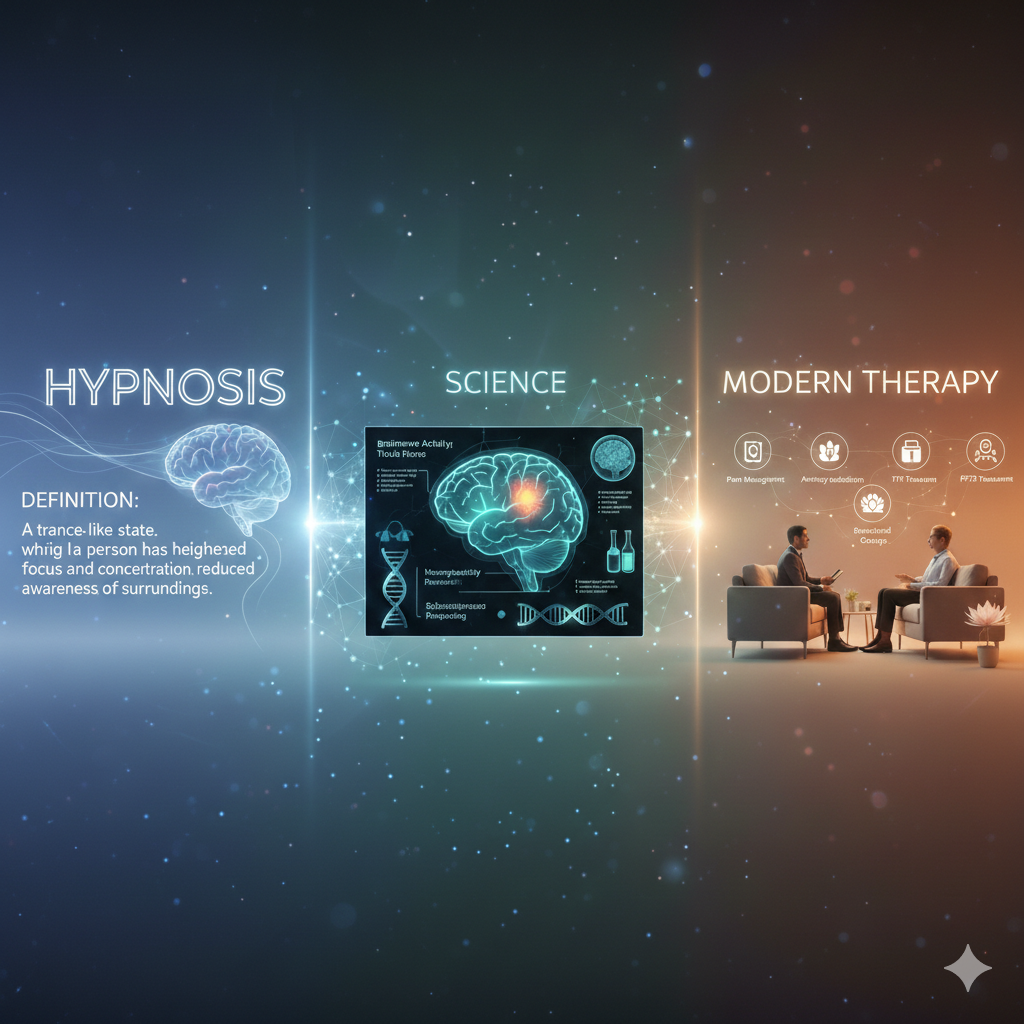
Hypnosis is often explained in complicated terms, which adds to the confusion surrounding it. In its simplest and most accurate form, hypnosis is a natural state of focused attention and heightened awareness, where the mind becomes calm, inwardly focused, and more receptive to meaningful guidance.
Contrary to popular belief, hypnosis is not sleep. A person in hypnosis is not unconscious, unaware, or disconnected from reality. In fact, awareness is very much present. The difference lies in where the attention is directed. During hypnosis, external distractions reduce, and the mind becomes more engaged with internal experiences such as thoughts, sensations, emotions, and imagery.
Everyone experiences hypnotic states in everyday life. When you are deeply absorbed in a book and fail to notice time passing, when you drive on a familiar route and later realize you do not remember every turn, or when you are completely focused on a task and block out surrounding noise, you are experiencing a form of natural hypnosis. The hypnotic state is not created by someone else; it is a mental ability that already exists within you.
In a therapeutic context, hypnosis is used intentionally. A trained practitioner guides the individual into this focused state so the mind can access deeper levels of awareness, particularly the subconscious mind. The subconscious is responsible for habits, emotional responses, learned behaviours, and long-standing beliefs. These patterns are often formed over years and operate automatically, without conscious effort.
Hypnosis allows communication with this deeper part of the mind in a way that normal, everyday thinking does not. When the conscious mind relaxes, it becomes less analytical and less resistant. This does not mean logic disappears or control is lost. It simply means the mind becomes more open to examining existing patterns and considering new, healthier responses.
It is also important to understand what hypnosis is not. Hypnosis does not involve surrendering control to another person. No one can force you to think, say, or do anything against your values or will. Ethical hypnosis is a collaborative process. The individual remains aware, capable of speaking, and able to stop the session at any point. The practitioner’s role is to guide, not dominate.
Another common misunderstanding is that hypnosis requires special talent or a weak mind. In reality, the ability to experience hypnosis is linked to focus and imagination, not vulnerability. Many people who are analytical, self-aware, or mentally strong respond very well to hypnosis because they can engage deeply with guided attention.
From a practical perspective, hypnosis can be viewed as a mental skill. It is the skill of directing attention inward, calming mental noise, and allowing the mind to process information at a deeper level. When used responsibly and professionally, this state becomes a powerful foundation for therapeutic work, emotional regulation, and personal development.
Understanding what hypnosis truly is removes unnecessary fear and unrealistic expectations. It is neither magic nor manipulation. It is a natural mental state, guided with intention, and used purposefully within a therapeutic framework. This clarity is essential before exploring how hypnosis therapy works and why it has become a trusted approach in modern mental and emotional care.
What Is Hypnosis Therapy?
Hypnosis therapy, also known as clinical hypnosis, is a structured therapeutic approach that uses hypnosis as a tool to support mental, emotional, and behavioural change. Unlike casual or entertainment-based uses of hypnosis, hypnosis therapy is conducted within a professional framework, with a clear purpose, defined process, and ethical responsibility.
At its core, hypnosis therapy works with the subconscious mind. While the conscious mind handles logic, reasoning, and day-to-day decision-making, the subconscious mind governs habits, emotional reactions, automatic behaviours, and deeply held beliefs. Many challenges people face such as persistent anxiety, irrational fears, low confidence, or self-sabotaging patterns are rooted at this deeper level. Hypnosis therapy focuses on addressing these underlying patterns rather than only managing surface symptoms.
In a hypnosis therapy session, the individual is guided into a relaxed yet focused state of awareness. This state allows the mind to temporarily reduce mental noise, overthinking, and internal resistance. In this environment, the therapist can help the individual explore emotional triggers, identify limiting beliefs, and introduce constructive suggestions that align with the person’s goals and values. The process is collaborative, not directive. The therapist does not impose change but facilitates awareness and internal adjustment.
It is important to distinguish hypnosis therapy from traditional talk therapy. While talk therapy primarily engages the conscious mind through discussion and analysis, hypnosis therapy works experientially. It allows individuals to access emotions, memories, and responses that may not surface through conversation alone. This does not mean hypnosis therapy replaces other therapeutic methods. In many cases, it complements them, offering an additional pathway for insight and transformation.
Hypnosis therapy is used across a wide range of applications. These include emotional regulation, stress management, confidence building, habit change, and behavioural improvement. In clinical and wellness settings, it is also applied to address phobias, trauma-related responses, sleep difficulties, and psychosomatic concerns. The versatility of hypnosis therapy lies in its adaptability to individual needs rather than a one-size-fits-all approach.
A key aspect of hypnosis therapy is safety and consent. A qualified practitioner ensures that the individual understands the process, feels comfortable, and remains in control throughout the session. Hypnosis therapy does not involve mind control, unconscious behaviour, or loss of awareness. The individual remains mentally present and can communicate at all times.
Ultimately, hypnosis therapy is not about quick fixes or dramatic change overnight. It is about creating the right mental conditions for insight, re-patterning, and gradual, meaningful improvement. When practiced responsibly and professionally, hypnosis therapy becomes a practical, respectful, and effective method for working with the mind at a deeper level.
Understanding hypnosis therapy as a legitimate therapeutic process not a performance or mystery is essential before exploring how it works on the subconscious mind and why it has gained credibility across modern therapeutic practices.
How Hypnosis Works on the Subconscious Mind
To understand how hypnosis works, it is important to first understand how the mind is structured. The human mind operates on more than one level. The conscious mind is responsible for reasoning, decision-making, and analytical thinking. It is the part of the mind we use when we evaluate information, solve problems, or make deliberate choices. Beneath this layer lies the subconscious mind, which manages emotions, habits, automatic reactions, memories, and long-standing belief systems.
Most behavioural and emotional patterns are not the result of conscious decisions. They are learned responses stored in the subconscious over time. These patterns often develop early in life and continue to operate automatically, even when they no longer serve a useful purpose. This is why many people understand their challenges logically but still struggle to change them. The conscious mind recognizes the issue, but the subconscious continues to repeat the same response.
Hypnosis works by creating a mental state in which communication with the subconscious mind becomes more accessible. During hypnosis, the mind enters a deeply focused and relaxed state. External distractions reduce, and mental chatter slows down. This allows the conscious mind to step back slightly, reducing its tendency to analyze, judge, or resist. As this happens, the subconscious becomes more responsive to constructive input.
In this focused state, the mind does not lose awareness or control. Instead, attention shifts inward. The individual remains alert, capable of understanding what is being said, and aware of their internal experience. The difference is that the mind becomes more receptive to examining emotional responses and habitual patterns without the usual mental resistance.
Hypnosis does not force change. Rather, it creates the conditions in which change can occur naturally. Through guided language, imagery, and therapeutic techniques, the practitioner helps the individual explore subconscious associations and emotional triggers. New perspectives and responses are gently introduced, allowing the subconscious to update outdated patterns in a safe and controlled manner.
Another important aspect of hypnosis is suggestibility. In everyday life, the subconscious is constantly influenced by repeated thoughts, emotional experiences, and environmental cues. Hypnosis simply uses this natural mechanism intentionally and responsibly. Suggestions given during hypnosis are effective because they align with the individual’s values, goals, and willingness to change. Suggestions that conflict with personal beliefs or ethics are automatically rejected by the mind.
This is why trust and collaboration are essential in hypnosis therapy. The process works best when the individual feels safe, informed, and actively engaged. Hypnosis enhances self-awareness rather than bypassing it. It allows individuals to access deeper mental processes while remaining grounded and present.
By working at the subconscious level, hypnosis addresses the root of many challenges rather than their symptoms. This depth is what makes hypnosis a powerful therapeutic tool when applied correctly. Understanding this mechanism lays the foundation for exploring the scientific basis of hypnosis and its growing acceptance in modern psychological and wellness practices.
Science Behind Hypnosis
Hypnosis is often misunderstood as something abstract or unscientific, largely because its effects are internal and not always visible from the outside. However, modern research has shown that hypnosis is associated with measurable changes in brain activity, perception, and cognitive processing. It is not imagination or belief alone; it is a genuine neuropsychological phenomenon.
From a scientific perspective, hypnosis is linked to specific brain states. When a person enters hypnosis, brain activity often shifts from the fast, alert beta waves associated with analytical thinking to slower alpha and theta waves. These states are commonly observed during deep relaxation, meditation, and creative focus. In this condition, the brain becomes less reactive to external distractions and more responsive to internal experiences.
Neuroscience studies using brain imaging techniques such as functional MRI and EEG have demonstrated that hypnosis alters how different regions of the brain communicate with each other. Areas responsible for attention, emotional regulation, and sensory processing show distinct patterns during hypnosis. This explains why people under hypnosis can experience changes in perception, such as reduced pain sensitivity or altered emotional responses, without losing awareness.
One of the most significant findings in hypnosis research is its effect on perception rather than sensation itself. For example, in pain-related studies, hypnosis does not always eliminate physical signals from the body. Instead, it changes how the brain interprets those signals. This distinction is critical. Hypnosis works by influencing interpretation and response, not by overriding reality. This principle applies equally to emotional experiences, habits, and stress reactions.
Psychology also recognizes hypnosis as a state of focused attention combined with increased responsiveness to suggestion. Importantly, “suggestion” in this context does not mean persuasion or control. It refers to the brain’s natural ability to accept and process information more efficiently when mental resistance is reduced. This is the same mechanism through which learning, conditioning, and habit formation occur throughout life.
Another scientifically relevant aspect of hypnosis is individual variability. Research shows that people respond to hypnosis differently, largely based on their capacity for focus, absorption, and imagination. This does not reflect weakness or strength of mind. In fact, individuals who are mentally engaged, self-aware, and capable of sustained attention often respond well to hypnosis.
Hypnosis is increasingly acknowledged within integrative healthcare and psychological research. While it is not positioned as a cure-all, it is recognized as a valuable complementary approach when used appropriately. Its scientific foundation lies in its ability to influence attention, perception, and emotional processing at a neurological level.
Understanding the science behind hypnosis helps separate fact from fiction. Hypnosis does not bypass the brain; it works with it. It does not replace rational thought; it temporarily softens mental rigidity. This scientific grounding is what allows hypnosis to be applied responsibly within therapeutic and wellness settings, earning its place alongside other evidence-informed approaches to mental and emotional care.
Clinical Hypnosis vs Stage Hypnosis
One of the main reasons hypnosis is often misunderstood is the confusion between clinical hypnosis and stage hypnosis. Although both use the term “hypnosis,” their purpose, process, and outcomes are fundamentally different. Understanding this distinction is essential before forming any opinion about hypnosis as a therapeutic tool.
Stage hypnosis is designed purely for entertainment. It is performed in front of an audience, often in a theatrical setting, and aims to create dramatic, humorous, or exaggerated reactions. Participants are usually selected based on their willingness to perform and their responsiveness to social cues. The environment itself encourages compliance, as people are influenced by group dynamics, expectations, and the desire to entertain or fit in. These performances are not intended to provide insight, healing, or long-term change.
Clinical hypnosis, on the other hand, is practiced in a private, professional setting with a clear therapeutic objective. The focus is not on spectacle or performance, but on the individual’s well-being. Clinical hypnosis is used to support emotional regulation, behavioural change, stress management, and other therapeutic goals. It follows ethical guidelines, prioritizes consent, and is conducted by trained practitioners who understand both psychological principles and client safety.
Another major difference lies in control and awareness. In stage hypnosis, actions may appear exaggerated, which reinforces the misconception that people lose control during hypnosis. In clinical hypnosis, the individual remains fully aware and in control throughout the session. There is no pressure to act, respond, or perform. The experience is internal, reflective, and purposeful.
Intent also separates these two approaches. Stage hypnosis seeks immediate visible reactions for entertainment value. Clinical hypnosis seeks gradual, meaningful internal change. The success of a clinical session is measured by insight, emotional shift, or behavioural improvement not by how dramatic the experience appears from the outside.
Ethics play a central role in clinical hypnosis. A responsible practitioner ensures that the client understands the process, feels safe, and agrees to the goals of the session. Confidentiality, respect, and psychological boundaries are fundamental. These standards do not apply to stage hypnosis, where the primary responsibility is to entertain an audience rather than protect the participant’s mental or emotional well-being.
When people judge hypnosis based on stage performances, they are not evaluating hypnosis itself, but a theatrical representation of suggestibility and social influence. Clinical hypnosis is a different discipline entirely. It is structured, client-centered, and grounded in therapeutic intent.
Recognizing this difference allows hypnosis to be seen clearly for what it is in a professional context. Clinical hypnosis is not about control or performance. It is about collaboration, awareness, and purposeful work with the mind. This clarity is necessary before addressing common concerns about safety, control, and ethical practice in hypnosis therapy.
Is Hypnosis Safe?
Safety is one of the most common concerns people have about hypnosis, and it is a valid question. Much of the uncertainty around safety comes from misinformation, exaggerated portrayals, and a lack of understanding about how hypnosis is actually practiced in a therapeutic setting. When hypnosis is conducted professionally and ethically, it is widely regarded as a safe and controlled process.
Hypnosis does not involve loss of consciousness or surrendering control. Throughout a hypnosis session, the individual remains aware of their surroundings and capable of making decisions. If at any point a person feels uncomfortable, they can speak, move, or choose to stop the process. Hypnosis cannot trap someone in a mental state, nor can it force thoughts or actions that go against personal values or beliefs.
From a psychological standpoint, hypnosis works with the mind’s natural ability to focus and respond to internal experiences. It does not introduce foreign ideas or override judgment. Instead, it helps individuals access their own mental resources in a calmer and more receptive state. This is why hypnosis is considered non-invasive and low risk when used appropriately.
That said, safety in hypnosis depends largely on the practitioner and the context in which it is used. A qualified practitioner takes time to understand the individual’s background, concerns, and goals before beginning any hypnotic work. Informed consent, clear communication, and emotional readiness are essential components of a responsible session. Hypnosis should never feel rushed, coercive, or confusing.
There are certain situations where hypnosis should be approached with caution or may not be suitable without additional professional support. Individuals experiencing severe psychiatric conditions, active psychosis, or unmanaged trauma may require specialized care beyond general hypnosis therapy. In such cases, collaboration with medical or mental health professionals is important. Ethical practitioners recognize these boundaries and do not attempt to work outside their scope.
Side effects from hypnosis are rare and typically mild. Some individuals may experience temporary fatigue, emotional release, or heightened awareness after a session, similar to what can occur after deep relaxation or introspective work. These responses usually settle naturally and are part of the mind processing internal changes.
Ultimately, hypnosis is as safe as the environment in which it is practiced. When guided by a trained professional who respects ethical standards, client autonomy, and psychological well-being, hypnosis is considered a supportive and controlled therapeutic approach.
Understanding the safety of hypnosis helps remove unnecessary fear and builds trust in the process. With this foundation, it becomes easier to explore the practical benefits of hypnosis therapy and how it can be applied responsibly to support mental and emotional well-being.
Benefits of Hypnosis Therapy
The benefits of hypnosis therapy extend beyond simple relaxation. When applied within a professional and ethical framework, hypnosis therapy supports change at a deeper psychological level by addressing the patterns that influence thoughts, emotions, and behaviour. Its value lies not in dramatic experiences, but in steady, meaningful improvement over time.
One of the primary benefits of hypnosis therapy is improved emotional regulation. Many emotional reactions are automatic and deeply ingrained. Hypnosis allows individuals to observe these reactions without becoming overwhelmed by them. This increased awareness creates space for calmer responses, helping people manage stress, anxiety, and emotional overload more effectively in everyday situations.
Hypnosis therapy is also widely used to support behavioural change. Habits such as overthinking, avoidance, self-sabotage, or unhelpful coping mechanisms are often driven by subconscious conditioning rather than conscious choice. By working directly with the subconscious mind, hypnosis therapy helps individuals loosen these patterns and replace them with responses that better align with their goals and values.
Another important benefit is enhanced mental clarity and focus. The hypnotic state encourages a calm, organized mental environment where thoughts are less scattered and more purposeful. Many individuals report improved concentration, decision-making, and a stronger sense of internal direction after consistent therapeutic work. This clarity often contributes to increased confidence and self-trust.
Hypnosis therapy can also support physical well-being by influencing how the mind responds to bodily sensations. It has been used as a complementary approach in pain management, sleep improvement, and stress-related physical discomfort. While hypnosis does not replace medical treatment, it can help individuals change their perception of physical sensations and reduce the emotional stress associated with them.
In addition, hypnosis therapy encourages greater self-awareness. Clients often gain insight into the origins of their emotional triggers and behavioural patterns. This understanding is not forced or analytical; it emerges naturally as the mind becomes more receptive to internal exploration. Increased self-awareness empowers individuals to make conscious, informed changes rather than reacting automatically.
It is important to note that the benefits of hypnosis therapy are not uniform for everyone. Results depend on factors such as personal motivation, openness to the process, and the nature of the concern being addressed. Hypnosis therapy is not a one-time solution, but a process that unfolds through consistency and engagement.
Overall, hypnosis therapy offers a practical and respectful way to work with the mind. Its benefits are rooted in awareness, adaptability, and emotional balance rather than quick fixes. When integrated thoughtfully, hypnosis therapy becomes a valuable tool for personal development and mental well-being, supporting long-term growth rather than temporary relief.
What Happens in a Hypnosis Session?
Understanding what actually happens during a hypnosis session helps remove uncertainty and sets realistic expectations. A professional hypnosis session is structured, calm, and client-centered. It is not a performance or a passive experience. Instead, it is a guided process in which the individual remains actively involved at every stage.
A typical hypnosis session begins with a detailed conversation. This initial discussion allows the practitioner to understand the individual’s concerns, background, and goals. It is also an opportunity for the client to ask questions and clarify any doubts about the process. This phase is essential because hypnosis works best when there is trust, clarity, and mutual understanding.
After this conversation, the practitioner guides the individual into a relaxed and focused state. This is often referred to as the induction phase. The process is gentle and gradual, using techniques such as controlled breathing, guided imagery, or focused attention. The goal is not to put the person to sleep, but to help the mind shift into a calmer, more receptive state.
Once this focused state is achieved, the therapeutic work begins. Depending on the purpose of the session, the practitioner may guide the individual through imagery, reflective exercises, or carefully worded suggestions. These are designed to help the subconscious mind explore patterns, emotions, or beliefs connected to the individual’s concern. Throughout this phase, the client remains aware and capable of responding or communicating as needed.
The depth of hypnosis can vary from person to person and even from session to session. Some individuals experience vivid imagery and deep relaxation, while others notice subtle shifts in awareness. Both experiences are valid and effective. The value of the session lies in the internal processing that takes place, not in how dramatic it feels.
As the session concludes, the practitioner gently guides the individual back to full external awareness. This transition is gradual, allowing the mind to integrate the experience comfortably. Many people report feeling calm, mentally clear, or emotionally lighter afterward, although responses can vary.
A professional session always ends with reflection and grounding. The practitioner may discuss insights that emerged and provide guidance for integrating the session’s work into daily life. Hypnosis does not override free will or create instant change. Its effectiveness comes from repeated, intentional work and the individual’s willingness to engage with the process.
By understanding the structure of a hypnosis session, individuals can approach it with confidence rather than apprehension. This clarity helps set the stage for realistic outcomes and prepares the ground for exploring modern adaptations, such as online hypnosis sessions, and their effectiveness.
Online Hypnosis Sessions Does It Really Work?
With the growth of digital health and remote wellness services, online hypnosis sessions have become increasingly common. This shift has raised a natural question for many people: can hypnosis be effective without being physically present in the same room as the practitioner? The short answer is yes, provided certain conditions are met.
Hypnosis does not rely on physical touch or proximity. It works through focused attention, guided communication, and internal mental processes. Because these elements can be facilitated through voice and visual guidance, hypnosis adapts well to an online format. In many ways, online sessions mirror in-person sessions closely, following the same structure, ethical standards, and therapeutic intent.
One of the key advantages of online hypnosis is comfort. Being in a familiar environment often helps individuals relax more easily. This sense of safety and control can enhance focus and receptivity, which are essential for effective hypnotic work. For some people, removing the pressure of a clinical or unfamiliar setting allows them to engage more openly with the process.
Online hypnosis sessions typically take place through secure video or audio platforms. The practitioner guides the individual through relaxation, focused attention, and therapeutic techniques just as they would in a physical setting. Clear communication and a stable, distraction-free environment are important for ensuring the session runs smoothly. The individual is encouraged to choose a quiet space where they can remain undisturbed for the duration of the session.
Another important factor in online hypnosis is preparation. The practitioner usually provides guidelines before the session, such as wearing comfortable clothing, using headphones, and ensuring privacy. These simple steps help create an environment conducive to focused attention and minimize interruptions that could break concentration.
Effectiveness in online hypnosis depends more on the individual’s engagement than on the medium itself. As with in-person sessions, results are influenced by motivation, openness, and consistency. The subconscious mind responds to guidance and intention, not physical location. When these elements are aligned, online hypnosis can be just as effective as traditional sessions.
Online sessions also offer greater accessibility. Individuals who may not have local access to qualified practitioners, or who prefer privacy and flexibility, often find online hypnosis to be a practical solution. It allows people to receive professional support regardless of geographical boundaries.
In summary, online hypnosis is not a lesser alternative to in-person work. It is a modern extension of the same therapeutic principles, adapted to contemporary lifestyles. When conducted responsibly and with proper preparation, online hypnosis sessions provide a credible, effective, and accessible way to experience hypnosis therapy.
How Many Hypnosis Sessions Are Needed?
One of the most practical questions people ask before beginning hypnosis therapy is how many sessions are required to see meaningful results. While it is natural to look for a fixed number, hypnosis therapy does not follow a universal formula. The number of sessions needed varies based on the individual, the nature of the concern, and the depth of the underlying patterns involved.
Some issues are relatively focused and situational. In such cases, individuals may notice positive changes within a few sessions. These situations often involve specific goals, such as managing a particular fear, improving confidence for a defined situation, or addressing a recent stress-related concern. When the subconscious pattern is limited in scope, progress can occur more quickly.
Other challenges are more complex and layered. Long-standing habits, emotional conditioning formed over many years, or deeply rooted belief systems typically require a more gradual approach. In these cases, hypnosis therapy functions as a process rather than a quick intervention. Multiple sessions allow the mind to explore, adjust, and reinforce new responses over time, leading to more stable and lasting change.
Consistency plays an important role in effectiveness. Hypnosis therapy works by building familiarity and trust with the process. As individuals become more comfortable entering a focused state, the mind responds more efficiently to therapeutic work. This is why sessions are often spaced regularly, allowing insights and changes from one session to integrate before moving forward.
It is also important to understand that progress in hypnosis therapy is not always linear. Some sessions may feel more impactful than others, and changes may emerge gradually rather than immediately. This does not indicate a lack of effectiveness. Much of the work occurs beneath conscious awareness, with shifts becoming noticeable in behaviour, emotional responses, or thought patterns over time.
A professional practitioner sets realistic expectations from the beginning. Rather than promising instant results, they assess progress collaboratively and adjust the approach as needed. The individual’s participation, openness, and willingness to apply insights in daily life all influence outcomes.
Hypnosis therapy should not be viewed as a fixed number of sessions leading to a guaranteed result. It is better understood as a flexible process tailored to individual needs. For some, a short series of sessions may be sufficient. For others, ongoing support may be beneficial.
Understanding this variability helps individuals approach hypnosis therapy with patience and clarity. When expectations are realistic and the process is respected, hypnosis therapy can offer meaningful, sustainable change rather than temporary improvement.
Is Hypnosis Right for You?
Deciding whether hypnosis is the right approach begins with understanding your own needs, expectations, and readiness for change. Hypnosis is not a universal solution, nor is it something that works in the same way for everyone. Its effectiveness depends largely on how it aligns with the individual and the purpose for which it is used.
Hypnosis tends to work best for individuals who are open to self-reflection and willing to engage with their internal experiences. This does not require blind belief or unquestioning acceptance. In fact, a thoughtful and curious mindset often supports better outcomes. Hypnosis is a collaborative process, and meaningful results emerge when the individual participates actively rather than expecting change to happen passively.
It is also important to consider the type of issue being addressed. Hypnosis can be a supportive tool for emotional regulation, behavioural change, stress-related concerns, and personal development. It is particularly useful when challenges feel repetitive or automatic, even after conscious effort to change. However, hypnosis is not a replacement for medical care or specialized psychiatric treatment when those are required. A responsible practitioner will always respect these boundaries.
Personal motivation plays a key role. Hypnosis does not impose change; it facilitates it. If an individual feels pressured or uncertain about engaging in the process, progress may be limited. On the other hand, when there is a genuine intention to explore and improve, hypnosis provides a structured environment for that work to take place.
Another consideration is the quality of guidance. The experience of hypnosis depends greatly on the practitioner’s professionalism, ethics, and communication style. Feeling safe, understood, and informed is essential. Hypnosis should never feel secretive, overwhelming, or out of one’s control. A transparent and respectful approach is a strong indicator that the process is being handled responsibly.
It is also helpful to approach hypnosis with realistic expectations. Hypnosis is not instant transformation, nor is it a passive experience. Change often unfolds gradually, as insights integrate into daily life. Subtle shifts in awareness, emotional responses, and behaviour are often signs that the process is working.
Ultimately, hypnosis is right for those who are ready to engage thoughtfully with their inner processes and seek change through understanding rather than force. When approached with clarity, patience, and professional guidance, hypnosis can become a valuable tool for personal growth and mental well-being.
If you are considering hypnosis, taking the time to understand the process and your own intentions is the most important first step.